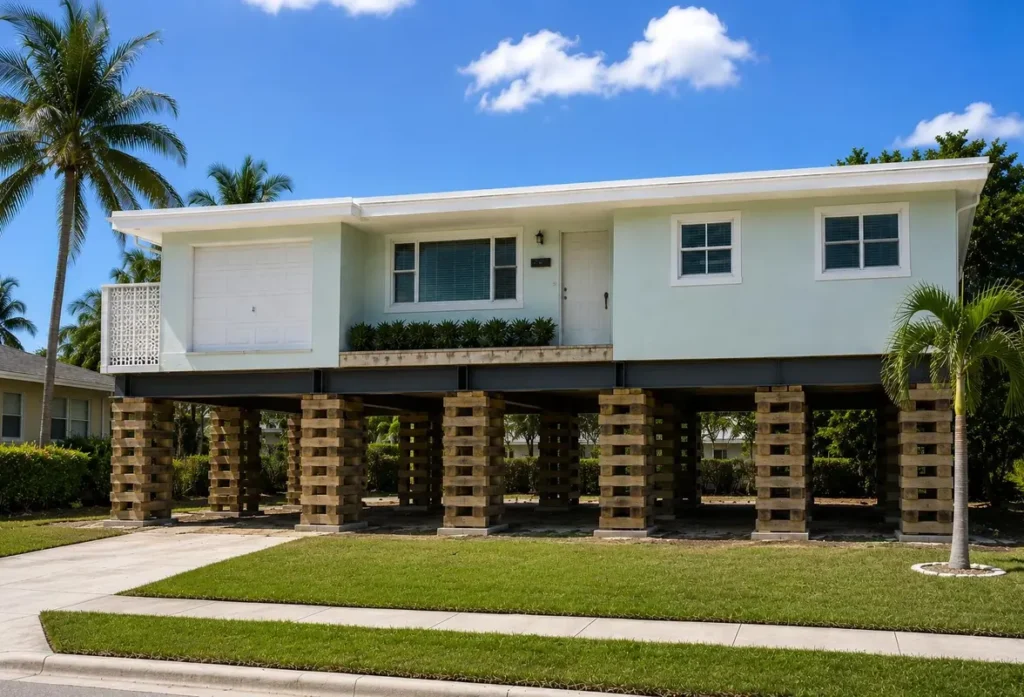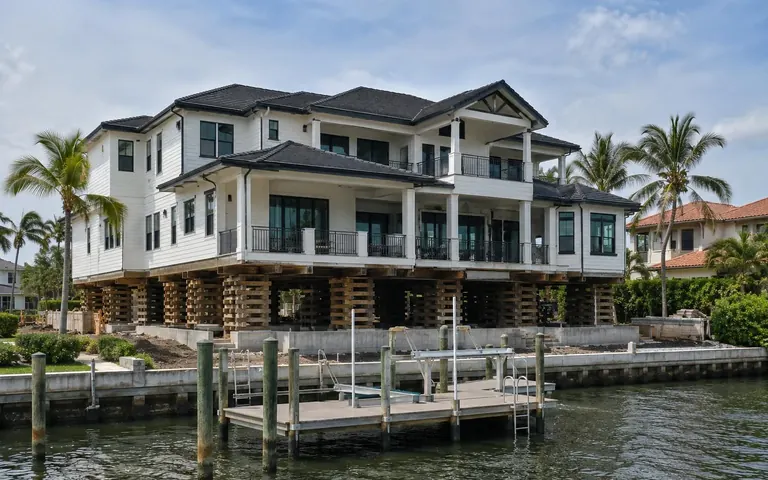
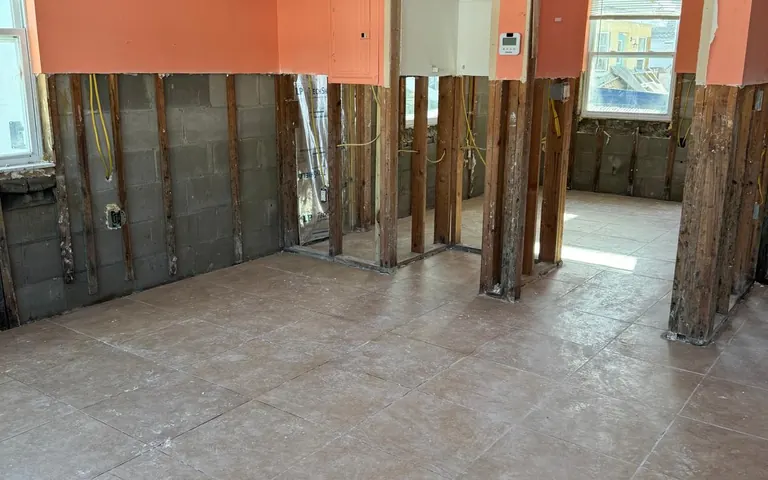
When repair costs pass the substantial-damage line, your home may have to be elevated. Here is how the rule works and what to plan for.
After a hurricane or major renovation, many coastal Florida homeowners hear about the FEMA 50% rule for the first time. It decides whether a home can simply be repaired or must be brought up to current flood standards, which often means elevating it. Knowing how the rule works helps you plan repairs and budgets realistically.
What Is the FEMA 50% Rule?
The FEMA 50% rule comes from the National Flood Insurance Program. If the cost to improve or repair a building in a special flood hazard area equals or exceeds 50% of the building’s market value, the work is considered a substantial improvement or substantial damage. The entire structure must then meet current floodplain requirements, including elevating the lowest floor to the required height.
How the FEMA 50% Rule Is Calculated
The building department compares two numbers:
- The cost of the work, including labor and materials for repairs and improvements, usually based on a detailed contractor estimate.
- The market value of the structure only, not the land. This often comes from a property appraiser value or an independent appraisal.
If the cost divided by the value is 50% or more, the project is substantial. Some Florida communities also add up improvements over several years, so earlier permits can count toward the total.
Substantial Damage After a Storm
After a flood or hurricane, local officials assess damaged homes. If the cost to restore a home to its pre-storm condition reaches the 50% threshold, it is declared substantially damaged and must be brought into compliance before it can be fully repaired and reoccupied.
Planning Around the FEMA 50% Rule in Coastal Florida
- Get an accurate, itemized estimate before applying for permits.
- Check the structure’s market value and whether an independent appraisal is worthwhile.
- Ask whether your community tracks cumulative improvements.
- Compare the cost of a limited repair with the long-term value of elevating the home.
- Review Increased Cost of Compliance coverage on your flood insurance policy.
When Elevation Becomes the Best Option
For many coastal Florida homes, elevating the house is the most practical way to meet current standards, reduce future flood risk and lower insurance costs. Our home lifting services and disaster recovery resources explain how we help homeowners through this process.
Every Tampa Bay property is different, so the best next step is a site visit and a written, itemized plan. Contact SBR Construction for a free consultation.